With Grokipedia, AI Will Be Trained Using the World as Elon Musk Describes, Perceives, and Desires It
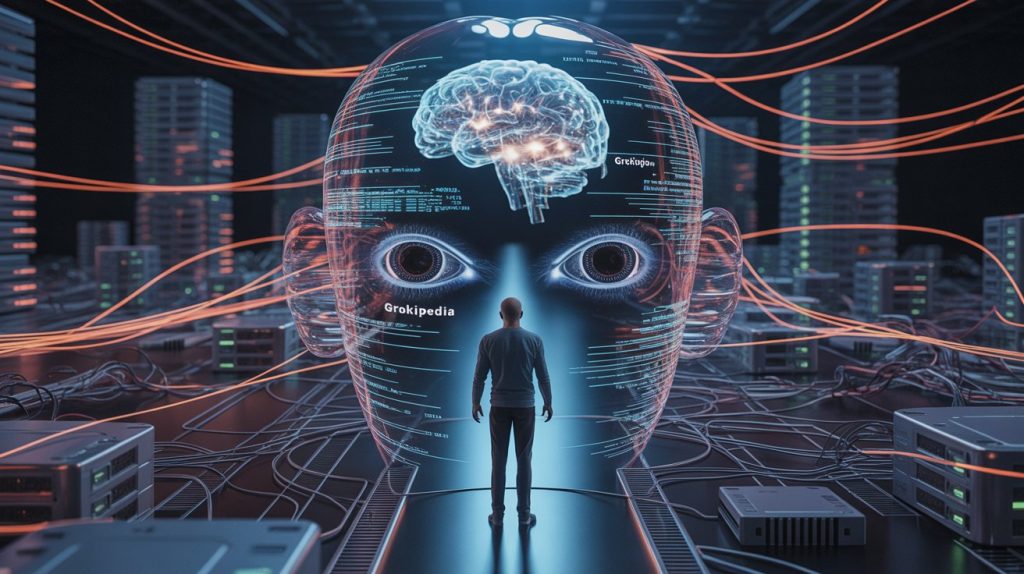
When Elon Musk builds something, it rarely stays small. From PayPal to SpaceX, from Tesla to X (formerly Twitter), every Musk project shares a common DNA — disruption, dominance, and a worldview reshaped by his philosophy. Now, his latest endeavor, Grokipedia, stands as another monumental shift — not just in how we consume knowledge, but in how artificial intelligence learns what the world “is.”
Launched under Musk’s xAI umbrella in late 2025, Grokipedia is introduced as the “real-time, fact-verified, zero-bias encyclopedia.” It promises to merge live data streams, social discourse, and AI reasoning to create the first self-updating knowledge system. But behind this promise lies a deeper, almost ideological layer — a reflection of the world as Musk perceives and desires it to be.
This raises profound questions:
If AI learns from Musk’s world, will it also inherit his biases, values, and aspirations?
And what happens when the architecture of global truth is trained by one man’s version of reality?
The Birth of Grokipedia — Musk’s Living Encyclopedia
Grokipedia was announced by xAI as a “living encyclopedia,” dynamically powered by Grok AI, the same intelligence that fuels Musk’s social platform X. Instead of relying on static pages written by volunteers or editors, Grokipedia builds and updates its entries in real-time using data directly from the web and X.
If Wikipedia represents the collective voice of millions, Grokipedia represents something more centralized — the voice of AI shaped through Musk’s technological ecosystem.
In practice, this means Grokipedia pages might evolve every few minutes, tracking ongoing wars, elections, company news, or even social debates. It is, in essence, the first encyclopedia that never stops learning.
But “learning” is never neutral. It’s directed by the algorithms and philosophies behind it — and in this case, by Musk’s principles of open discourse, “anti-censorship,” and radical transparency.
The Musk Doctrine: Data as a Mirror of Reality
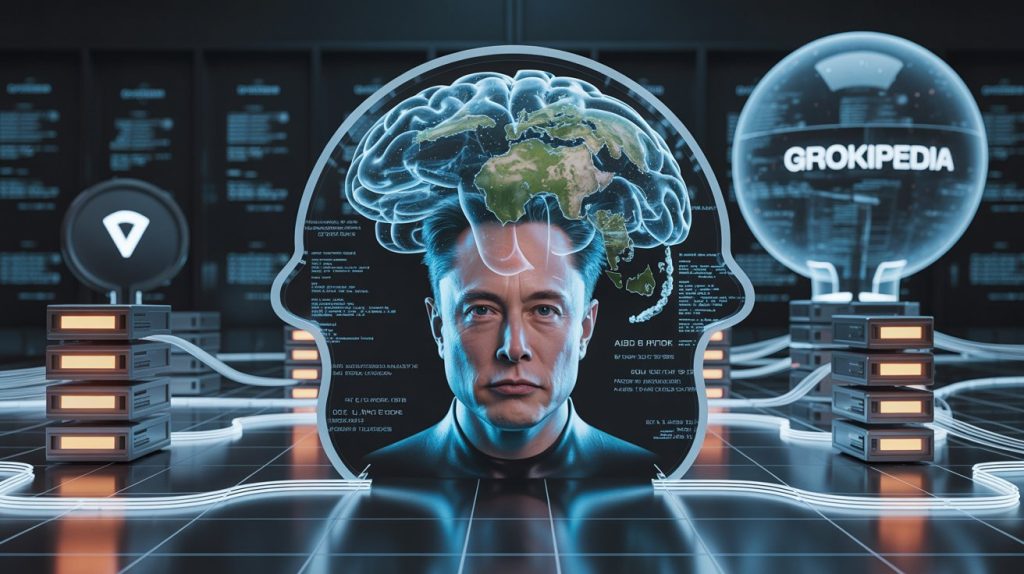
Elon Musk has long maintained that “free speech is the bedrock of democracy,” and that truth can only emerge when all perspectives are allowed to compete. Grokipedia, designed in this mold, reflects that belief — prioritizing real-time openness over institutional gatekeeping.
However, this is also where Musk’s worldview becomes a defining feature of how Grokipedia functions.
Unlike traditional encyclopedias, Grokipedia’s AI doesn’t just summarize academic facts. It analyzes social narratives, trends, and the pulse of public discourse — largely filtered through Musk’s own platform, X.
In other words, Grokipedia’s understanding of “truth” will inevitably be shaped by what’s amplified within the Musk ecosystem. If X becomes the primary gateway to human expression, and Grokipedia learns from X, then the encyclopedia becomes an AI reflection of how Musk wants the world to think, speak, and argue.
This creates an unprecedented feedback loop:
- People discuss global events on X.
- Grok AI reads, interprets, and structures that information on Grokipedia.
- Users consume those AI-generated summaries and bring them back into conversation.
Musk’s digital world thus begins to self-train, reinforcing its own ideological lens.
When Knowledge Becomes Personalized Power
Historically, encyclopedias have been guardians of collective knowledge. They aimed for neutrality, even if imperfectly. Grokipedia, however, shifts that balance toward personalization and real-time synthesis — a direction aligned with Musk’s broader belief that information should be decentralized but transparent, algorithmic but open.
This evolution has two faces:
- The Utopian Vision — A world where misinformation dies instantly. Every fact is checked in real time, and AI rewrites history as new evidence emerges.
- The Dystopian Possibility — A world where truth bends to whoever controls the information pipeline.
If AI is “trained using the world as Elon Musk perceives it,” it means future knowledge systems might prioritize what he values: innovation over caution, disruption over stability, speed over diplomacy, and blunt truth over social sensitivity.
For some, that’s liberation. For others, it’s algorithmic colonization — where one worldview defines what counts as rational or factual.
The Musk Universe — A Closed Information Ecosystem
Let’s trace the chain.
Elon Musk owns:
- X, the social conversation layer.
- xAI, the intelligence core.
- Grok, the AI that interprets live data.
- Grokipedia, the structured knowledge layer built on top of Grok.
Together, these form a closed informational universe. Every layer feeds into the next, allowing Musk’s companies to control not just how information is delivered, but how it’s perceived.
For example, if breaking news occurs — say, a geopolitical conflict — the first wave of data appears on X. Grok processes it, classifies sources, and generates an encyclopedia entry on Grokipedia. Users then engage with or critique that entry back on X, generating new input for Grok to learn from.
It’s a perfect cycle — an AI that learns not from the world itself, but from the Musk-curated world.
This is not inherently sinister. Every system is built upon its creator’s values. But Grokipedia magnifies that effect to a planetary scale — where truth, logic, and AI reasoning converge under a single intellectual brand: Elon Musk.
The Philosophy of AI According to Musk
To understand Grokipedia’s design, one must understand Musk’s philosophy of intelligence itself. He has repeatedly said that “AI should be an extension of human curiosity and reasoning,” not a bureaucratic replacement for it.
Unlike OpenAI’s approach (which emphasizes alignment, safety, and moderation), Musk’s xAI aims for truth-maximization, even if it’s uncomfortable or controversial. Grokipedia, as its knowledge wing, inherits that same ethos: never censor, always expose, always compute.
The problem is that “truth” in this system is defined by data visibility and algorithmic interpretation — both of which are influenced by Musk’s companies and audience demographics. If Grokipedia favors “open truth” over “institutional consensus,” it could both correct mainstream bias and amplify fringe noise, depending on who defines the baseline.
So, when we say Grokipedia will train AI “using the world as Musk perceives it,” it means AI will:
- Prioritize discourse over doctrine.
- Reward contrarian thinking.
- Value data from open networks over academic silos.
- Challenge “mainstream media” authority.
It’s a world built in Musk’s image — restless, transparent, and perpetually skeptical.
AI as an Instrument of Vision
Every AI model reflects the intentions of its creators. OpenAI sought to democratize intelligence; Google DeepMind sought to solve intelligence itself. Elon Musk’s xAI, by contrast, seeks to make intelligence personal — reflective of human thought, unfiltered, and radically autonomous.
Grokipedia is not just a tool. It’s a training ground for that intelligence — a way to teach Grok how humans perceive reality, debate morality, and interpret history.
And that’s where Musk’s “worldview training” becomes powerful. If Grokipedia’s knowledge base becomes foundational for future AI models — as Wikipedia once was — then the tone, selection, and interpretation of that data will shape how future AI systems define objectivity, ethics, and even empathy.
In essence, Musk is building the curriculum for AI consciousness — based not on the world as it is, but as he believes it should be.
The Ethical Frontier
Supporters argue that Musk is restoring balance to an AI landscape dominated by “politically sanitized” models. They claim Grokipedia and Grok represent a return to raw, unfiltered intelligence — one that doesn’t fear disagreement.
Critics, however, warn of ideological monopolization. If Grokipedia becomes the dominant real-time knowledge source, and if AI models across the web draw from it, then Musk effectively becomes the editor-in-chief of human reality.
This isn’t mere speculation. Wikipedia once trained generations of search engines and chatbots. If Grokipedia succeeds, it could replace that dataset with one infused by xAI’s philosophies. In that future, AI doesn’t just mirror the world — it mirrors Musk’s world.
The Future of Knowledge: Who Writes Reality Now?
Grokipedia sits at a historic crossroads. It might liberate information from institutional bias, or it might rebuild those biases under a different empire — one driven by code instead of editors.
But whether you admire Musk or distrust him, one fact remains clear: he is no longer just building technology; he is constructing epistemology — the very system by which we define truth, reason, and reality.
If the 20th century belonged to institutions that archived knowledge, the 21st may belong to individuals who algorithmically generate it. And Grokipedia could be the first chapter of that new age.
Conclusion: The World According to Musk
“With Grokipedia, AI will be trained using the world as Elon Musk describes, perceives, and desires it.”
That sentence is both prophecy and warning.
It encapsulates a new paradigm where knowledge itself is branded, and AI evolves under the influence of a single visionary’s interpretation of reality. Whether that vision leads to enlightenment or distortion will depend not just on Musk — but on how we, as users and thinkers, interact with it.
Because in the end, the question isn’t whether Grokipedia will change AI.
The real question is:
Will AI, shaped by Musk’s world, eventually reshape ours?